If your new puppy has you googling "have I ruined my life" at 4 in the morning — read this first.
Somewhere around night two, in the gap between one crying bout and the next, almost every new dog owner has the same thought: I have made a terrible mistake. You don't say it out loud. You definitely don't post it. But you think it — sitting on the kitchen floor in the dark, next to a crate containing nine weeks of pure, screaming chaos.
Here's what nobody told you before you brought them home: that thought is not a warning sign. It's a milestone. It is one of the most common, most predictable experiences in all of dog ownership — and it arrives on schedule, right when the exhaustion peaks and the bond hasn't formed yet. You are doing the hardest part with the least reward.
The 3am box
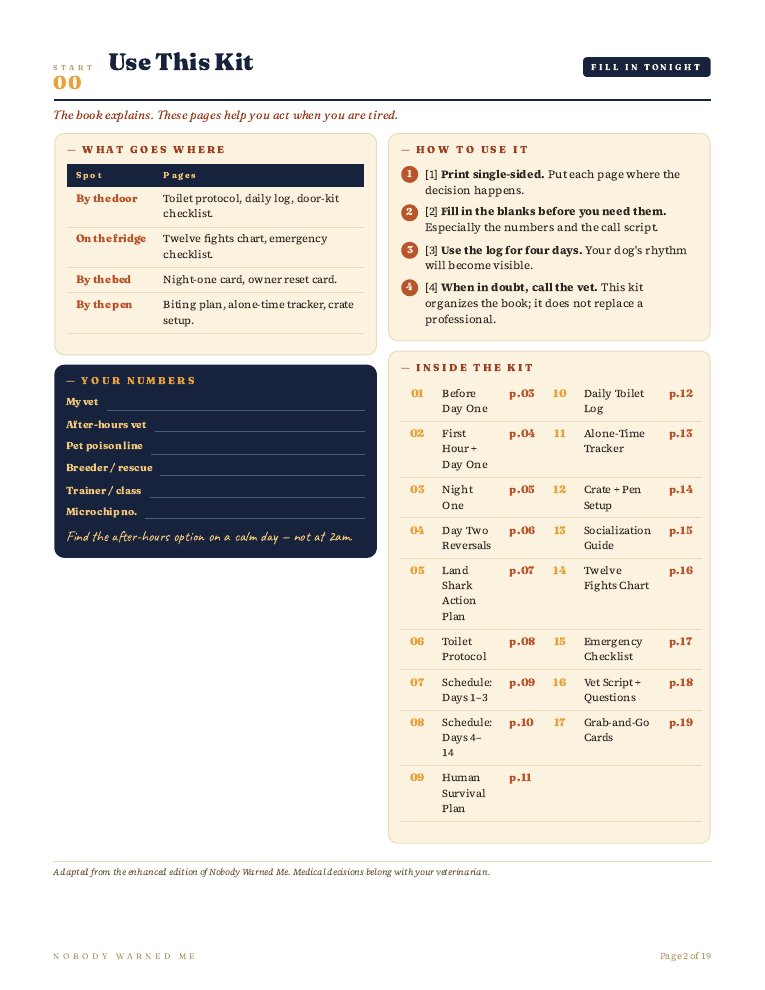
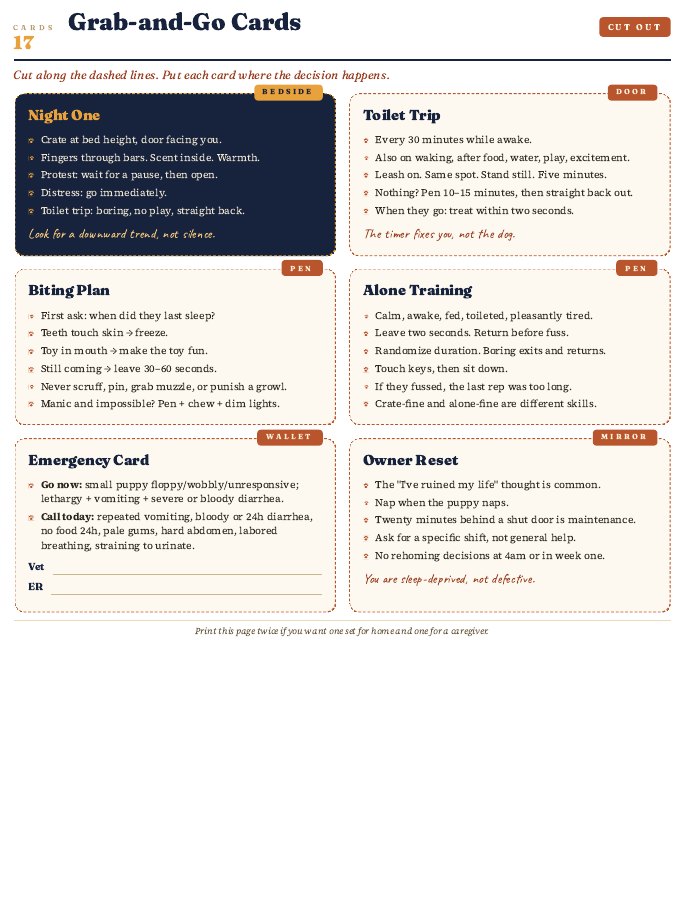
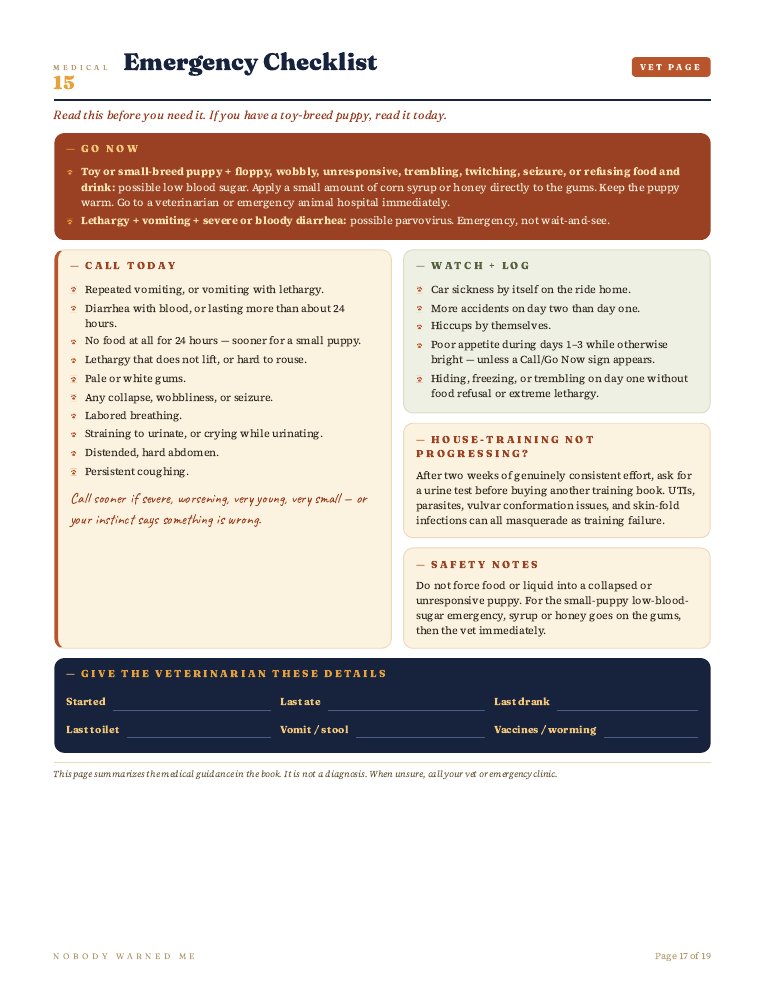
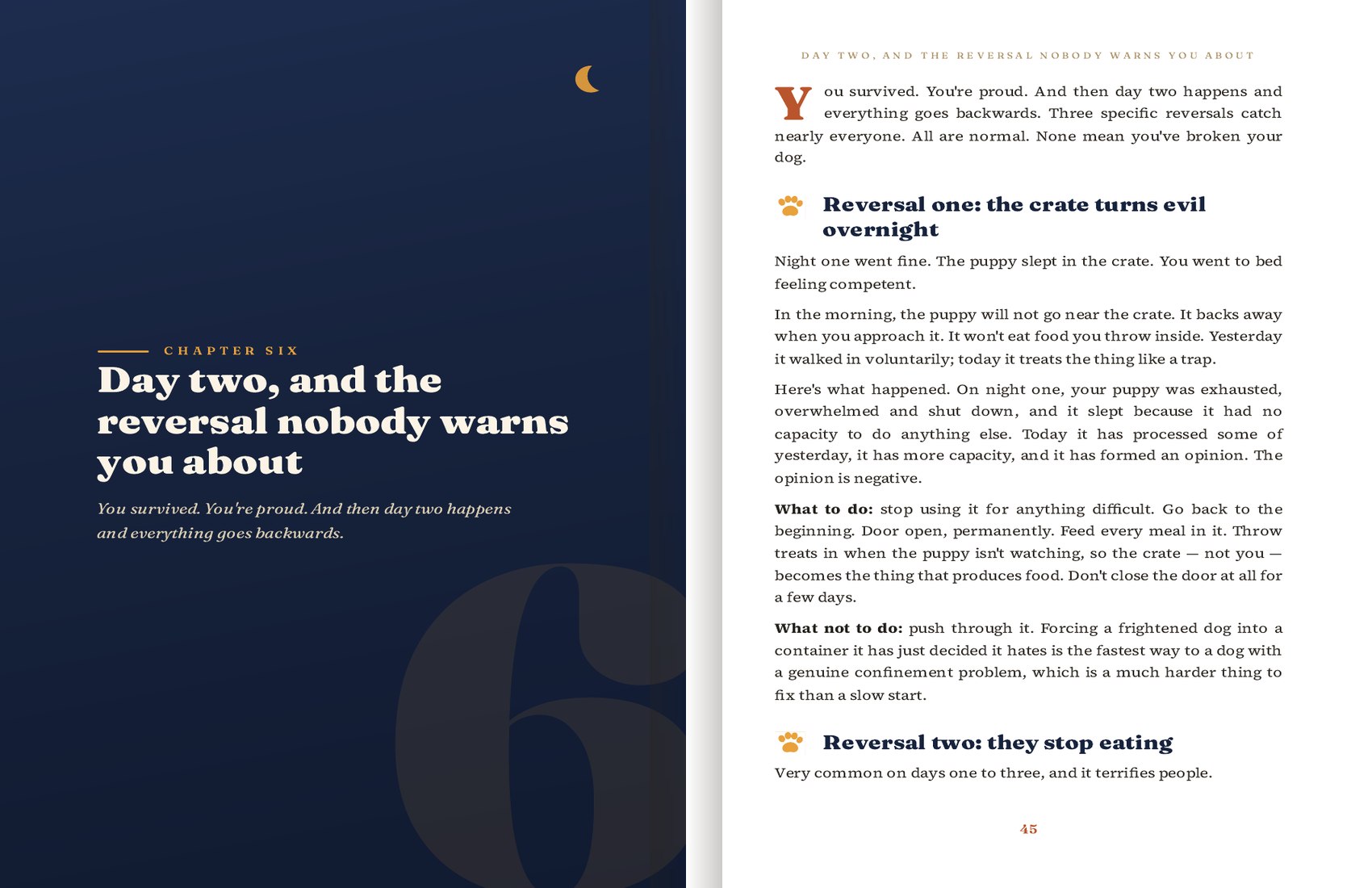
Every chapter of the book ends the same way — with a short box you can actually read at three in the morning. What is happening. Why it is normal. The one thing to do tonight. The rest can wait for daylight.
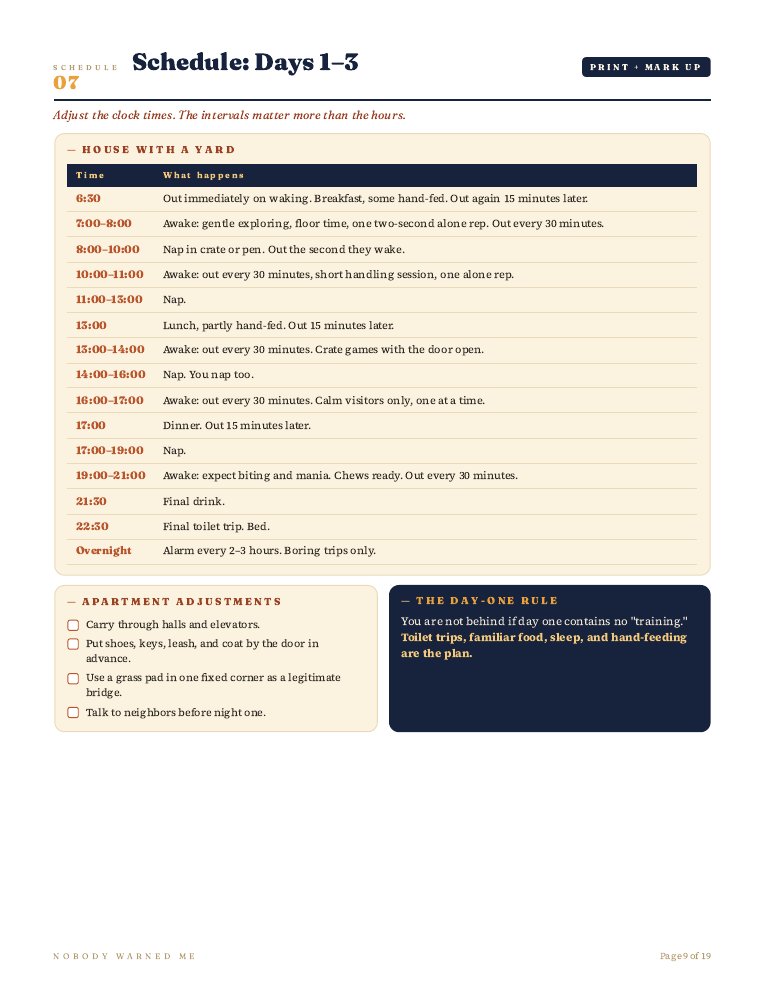
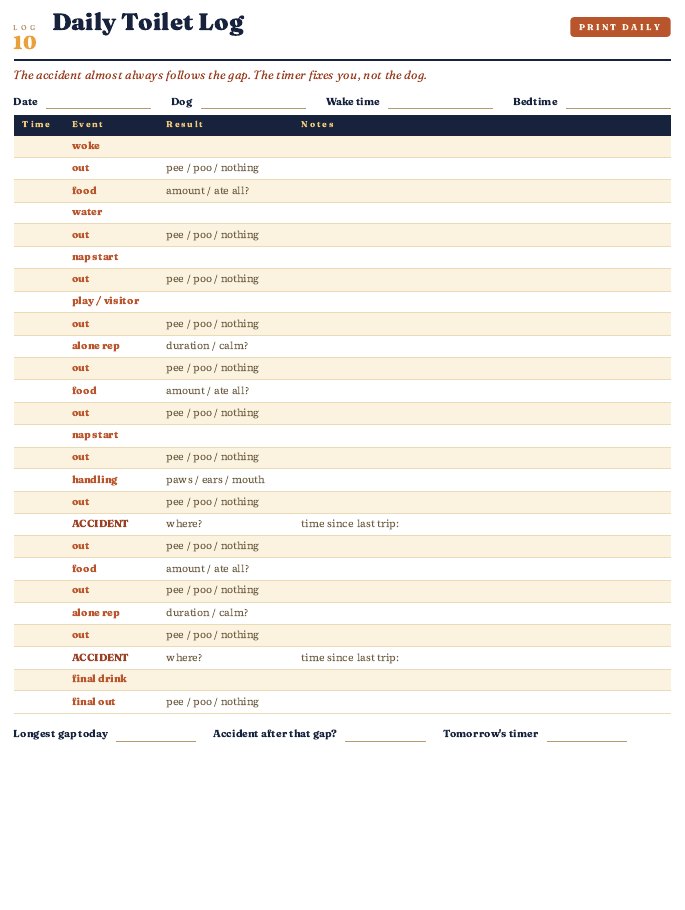
The problem was never that you got the "wrong dog," or that you're bad at this. The problem is that the first fourteen days of living with a puppy are governed by a set of rules nobody publishes — rules about sleep, about bladder timing, about what crying actually means, about why your sweet afternoon puppy becomes a land shark at 7pm. The internet answers each crisis with twelve conflicting opinions, delivered by people who are very confident and very wrong about your specific dog.
So we wrote the missing manual. Not a 400-page training bible. Not a list of commands. A calm, honest, chapter-per-crisis guide to the exact two weeks you're in right now — built from hundreds of real owner accounts, veterinary behavior guidance, and the questions people actually type into search bars at 4am.

The nights are the hard part. They're also the solvable part.
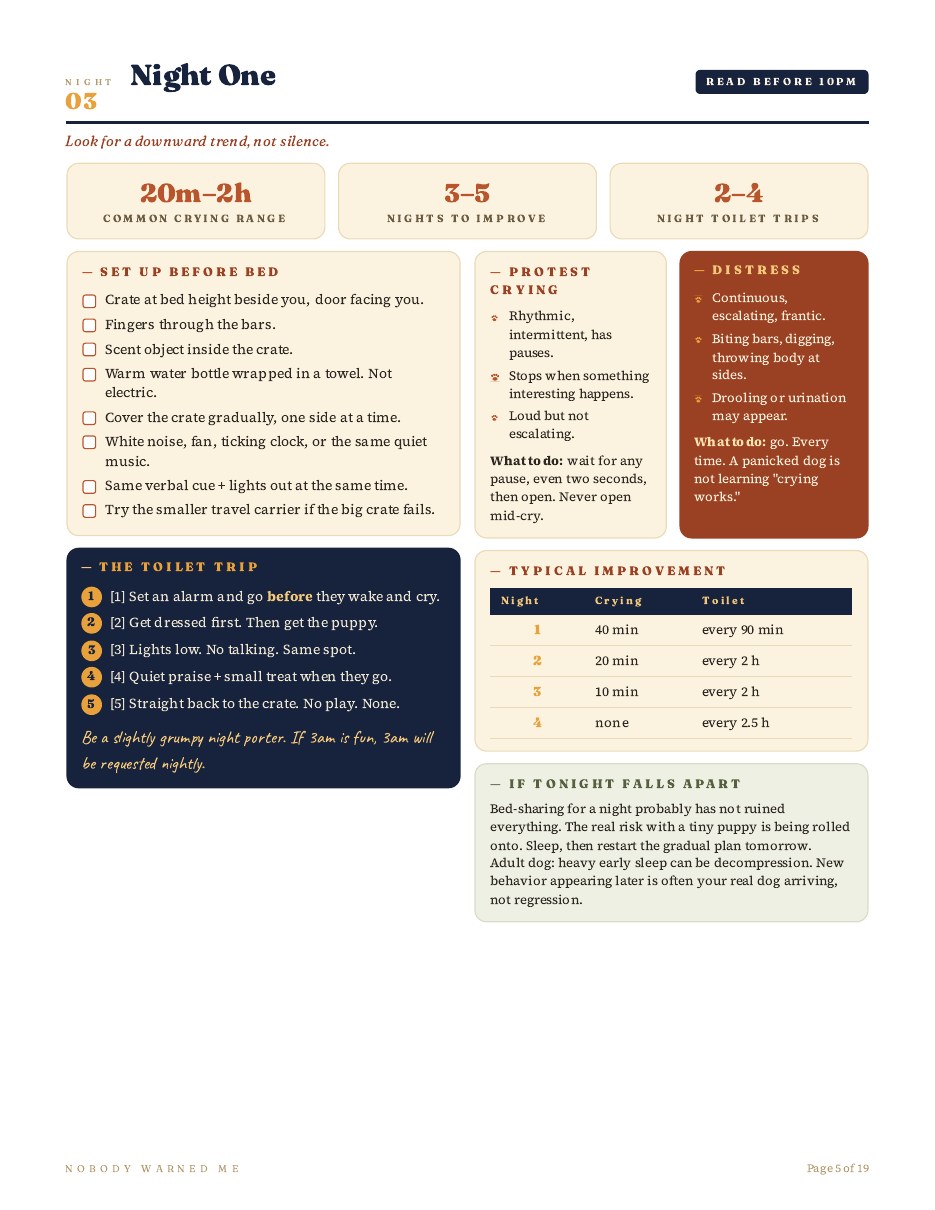
Take night one — the moment most new owners first panic. The crying starts, and you face the oldest fight in dog ownership: do you go to them, or do you wait it out? One camp says answering teaches them to cry. The other says ignoring teaches them to panic. Both are describing something real — and both are describing different situations.
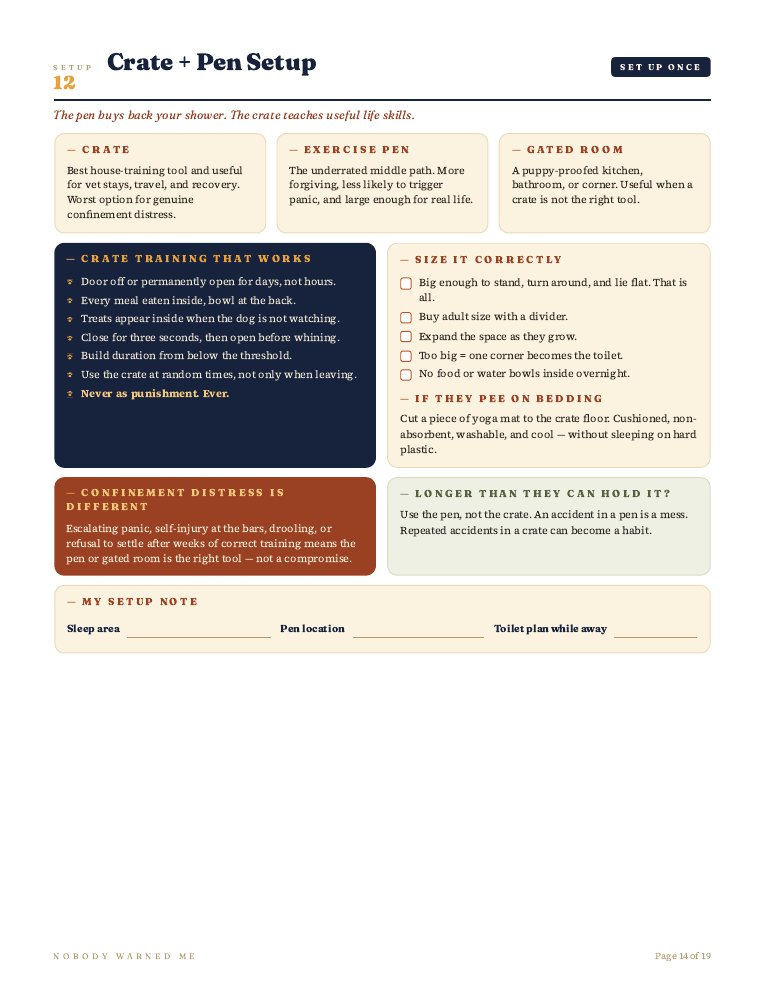
The book resolves all twelve of the great internet fights this way — not with louder certainty, but with the honest answer for your dog, your home, and your schedule. And it gives you the physical setups that end most of the panic before it starts: the crate at bed height, the fingers through the bars, the scent object from the litter, the gradual migration protocol that moves a puppy from your bedside to their permanent spot in one to three weeks, without a single dramatic night.
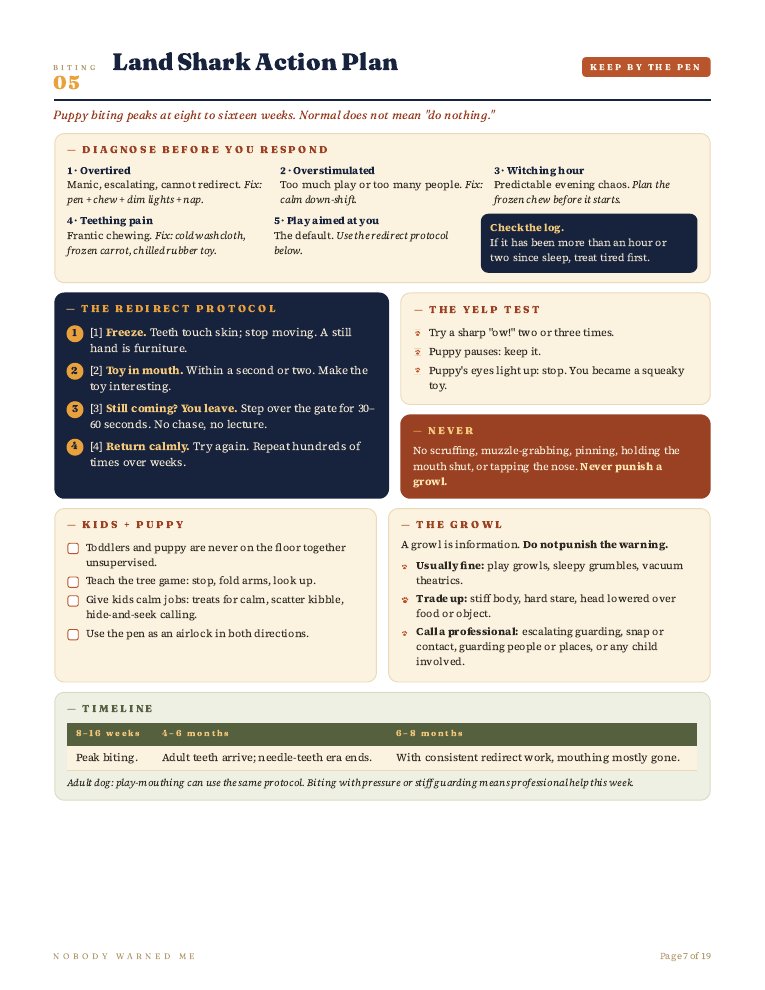
And the part nobody expects: the land shark phase.
Around day three, your sweet creature turns into a piranha with legs. Your hands look like you've been fighting roses. The book's approach is the one that actually works: diagnose before you treat. Overtired biting is not trained away — it's napped away. Witching-hour biting is planned for, with the frozen chew ready before 7pm. Play biting gets the four-step redirect protocol — go still, toy in mouth, exit, return calm — repeated a few hundred times over a few weeks. That's not a joke. That's the actual dosage.

Then there's the chapter almost no dog book has: the one about you. The sleep deprivation that genuinely impairs your judgement. The decision fatigue. The fact that you cannot complain, because you chose this. The rule that saves people: no irreversible decisions at 4am. Almost nobody who feels this way in week one still feels it in month three — and the book shows you why, in detail, with the plan to get there.